Reading trend 2026: why cozy & healing fiction is exploding

I'll admit I noticed it in my own app before I noticed it in the world. The dial our users touch most isn't genre - it's tone. And the tone they pick, more than any other, is some version of 'cozy.' Not 'epic.' Not 'dark.' Warm. Safe. The kind of chapter you'd read with a mug and no deadline. I thought that was just our little corner of the internet until I looked up and saw the entire publishing industry had quietly rearranged its shelves around the same instinct.
The genre that threw away the map
Cozy fantasy didn't arrive with a manifesto. It arrived with an orc who hangs up her sword to open a coffee shop. Travis Baldree's Legends & Lattes came out in 2022 and did something weird: it refused to be dangerous. No chosen one, no world-ending spell, just a retiree learning to pull a decent espresso in a city that's never heard of coffee. Readers loved it the way you love a friend who invites you over and asks no heavy questions.
What followed wasn't a copycat wave so much as a permission slip. TJ Klune's The House in the Cerulean Sea, Becky Chambers' A Psalm for the Wild-Built, Susanna Clarke's Piranesi - none of them fight a war. They're about belonging, small kindnesses, and the relief of a world that isn't trying to kill you. The subgenre now has a name and a pastel cover, and BookTok readers treat it like a self-care routine.
Healing fiction crossed an ocean and kept the feeling
This is the part that surprised me most. The comfort urge wasn't only in English-language fantasy. In Korea, Hwang Bo-reum's Welcome to the Hyunam-dong Bookshop - a quiet novel about ordinary people finding purpose in a neighborhood bookstore - has sold over a million copies and been translated into dozens of languages; its Turkish edition alone moved past 160,000. Japan sent over Syou Ishida's We'll Prescribe You a Cat, a gentle book about burnout and the strange prescriptions that fix it.
The throughline is the same in every language: people want stories that acknowledge life is hard without making it harder. A bookstore. A cat. A second-chance convenience store. The settings are modest on purpose, because the point isn't escape from reality - it's a brief, kind conversation with it.
Romantasy proved comfort and adrenaline can share a shelf
I'm not saying readers abandoned intensity. They just stopped accepting it without a payoff. Romantasy - fantasy with a romance wired into its spine - turned Rebecca Yarros' Fourth Wing into one of the bestselling books in the UK in 2024, and its sequel Onyx Storm became the fastest-selling adult novel in years. Sarah J. Maas built a whole empire on the same idea.
What's interesting is the feeling underneath the dragons. Readers weren't there for the battles. They were there for the relationship, the banter, the emotional safety of knowing two people will end up okay. The genre gets dismissed as 'just smut' by people who've never read it, but the readers I hear from describe something closer to a hug that also has a plot. Comfort and adrenaline were never opposites. Romantasy just stopped pretending they were.
BookTok didn't invent this. It handed it a megaphone.
I want to be fair to the algorithm. BookTok didn't create the hunger for comfort reading - readers have always wanted it, especially after a few rough years. What the platform did was make the hunger visible and communal. A reader crying on camera over a book's ending is more persuasive than any back-cover blurb, and publishers noticed. You can now buy 'BookTok edition' stickers and QR codes linking to viral videos printed right on the cover.
The downside is real too: when a trend is this loud, authors get burned out trying to repeat a viral hit, and some books get written for the clip instead of the reader. But the core signal is honest. People are telling each other, in public, that they read to feel better. That used to be something you admitted quietly.
Why a person building a reading app is paying attention
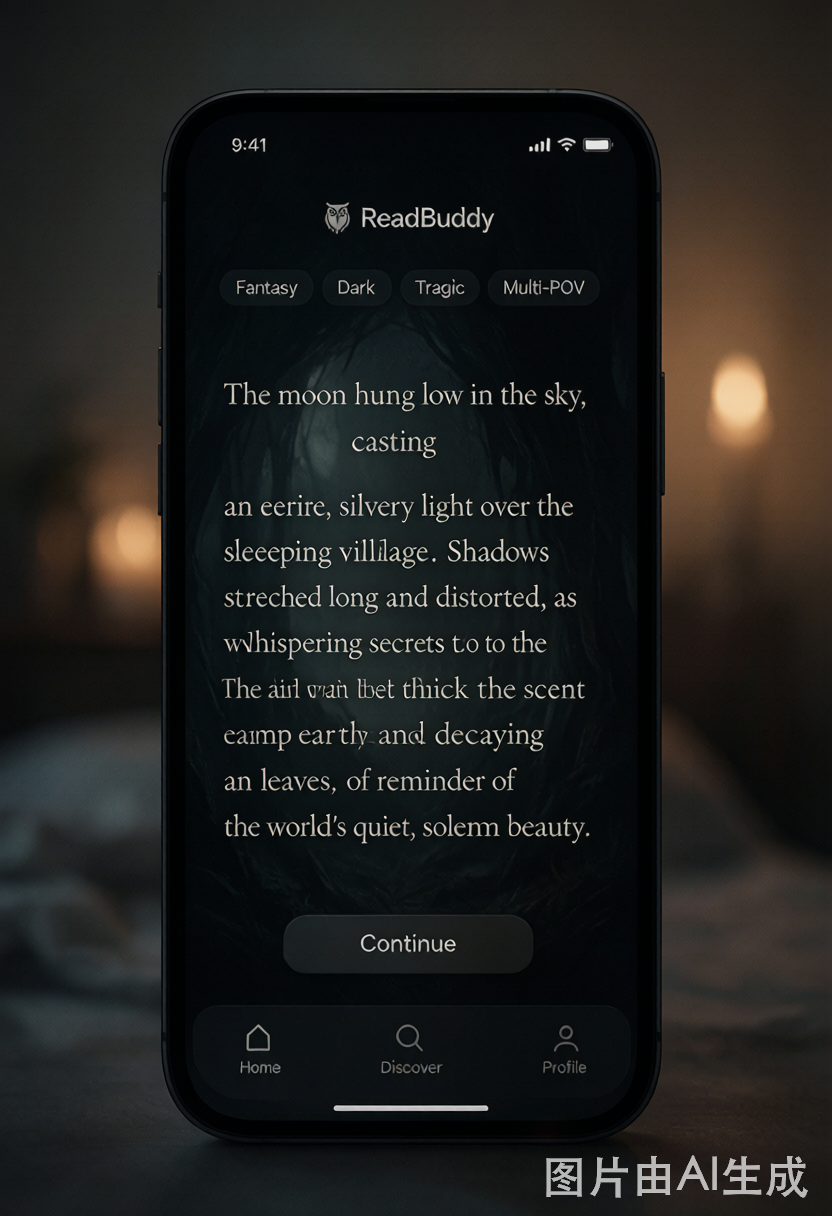
Here's my angle, since this is supposed to be a build blog and not a literary column. When I watch what people actually generate in ReadBuddy, the pattern matches the shelves. The cozy mystery reading list I put up one Sunday pulled more use in a weekend than half the 'epic' prompts combined. A commuter I wrote about earlier described his ideal night as 'cozy historical' - not 'gripping thriller.' The most-used dial on the app is tone, and the most-picked tone is some shade of warm.
That told me something the trend reports confirmed later: readers don't want less story. They want story that doesn't cost them more than the day already did. Generation on demand fits this perfectly, because you can ask for exactly the comfort level you need that night - a chapter that tucks you in instead of one that keeps you up.
What to read next, if you're tired too
If any of this sounds like the reading you've been avoiding, the move is small. Pick a feeling first, then a setting. 'Cozy + a bookshop.' 'Healing + a train ride.' The genre is just the costume; the comfort is the point.
And if you'd rather not start from a blank page, there's that shows exactly how to describe a feeling so the chapter stops reading like a robot. Or grab and change one word to make it yours. The trend isn't asking you to read more seriously - it's asking you to read more kindly, to yourself, at the end of a long day.
Want a chapter written for your exact mood tonight?
ReadBuddy generates on the spot — 30 chapters free, no card. Android only (Google Play).
Get ReadBuddy