Why I killed the book recommender to build an AI novel app
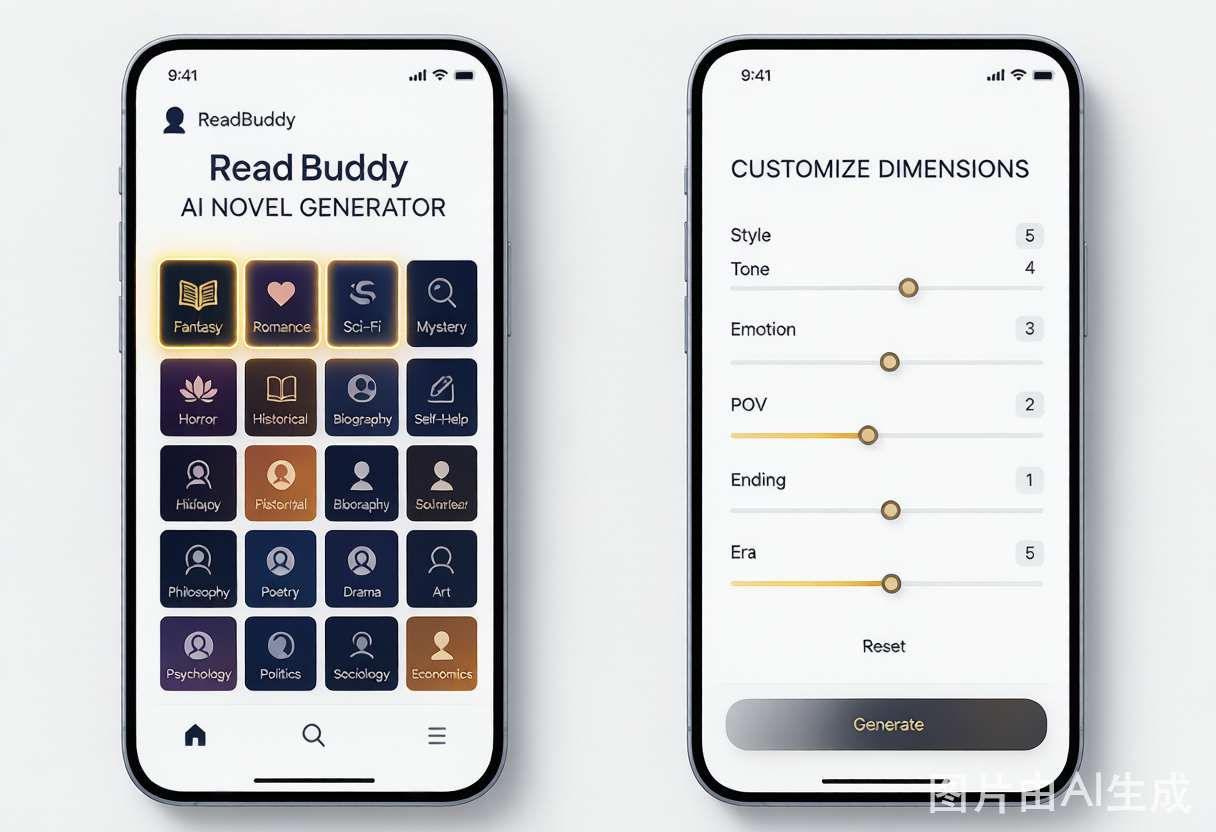
When I started ReadBuddy, the obvious move was a recommendation library. Scrape the good books, tag them by mood and genre, build a matching score, and surface the ten most likely to fit. I built the scraper, the tagger, the ranking model. Six weeks in, it worked. And it was useless.
Six weeks I will not get back
The demo looked great in a screenshot. You typed 'sad but hopeful' and it returned a tidy shelf of literary fiction with 4.2-star averages. A friend tried it and said, 'Yeah, these are good books.' Then he closed the tab and opened TikTok. That sentence stuck with me more than any metric.
I had solved the wrong problem. A recommender answers 'what should I read next' for someone who already likes reading. But the people I actually wanted to reach were the ones staring at a 'recommended for you' shelf at 11pm feeling nothing. More almost-right options just deepen the fatigue.
The night it actually clicked
I was tired, it was late, and I wanted something very specific: a dark fantasy chapter with several points of view, but not so devastating that I'd need therapy after. No book on my shelf fit that exact shape. I couldn't even describe it to a librarian.
That was the real job. Not discovery. Fit. Not 'find me a book like the last one' but 'write me the chapter that matches the precise, weird mood I'm in right now.' A recommender can't do that — it can only point at things that already exist. So I killed the branch. Deleted six weeks of work in one command and felt weirdly relieved.
What a personalized reading app is actually for
A personalized AI novel app, done right, generates instead of recommends. You describe the mood; it writes the chapter on the spot. The first time the prototype ran, I typed 'dark fantasy, multiple POVs, not too devastating' and got something I actually wanted to keep reading. Not because the prose was perfect — it wasn't — but because it was mine, in that moment.
One early tester, a commuter I'll call Marcus, put it better than I could: 'It's the only reading I finish, because it's exactly the length of my train ride and exactly the mood I was in.' That's the whole thesis. The app isn't a library. It's a kitchen that cooks the meal you're hungry for, right now.
The first chapter that felt real
I still remember the line it opened with: a crown prince refusing to wear the crown because it smelled like his father's death. Small detail. Specific. Human. Nothing in my tag database predicted that anyone wanted 'funeral-smell' as a tone, but the model found it because I'd given it a feeling, not a category.
That moment is why ReadBuddy exists. Not the 14 genres, not the six dials — those are just plumbing. The point is: you bring the mood, the machine brings the words, and for once the result fits.
What I'd tell other builders
If you're building anything in this space, three things I learned the hard way. First, validate the feeling, not the feature — a working recommender taught me nothing; a single 'this fits my night' did. Second, kill your darlings early; six weeks of code is cheaper than six months of denial. Third, ship the small true thing: a chapter that matches one mood beats a platform that matches none.
And if you want to see the mood-to-chapter flow in practice, shows exactly how to describe a feeling so the output stops reading like a robot. For the multi-character end of things, are where I would start.
Want a chapter written for your exact mood tonight?
ReadBuddy generates on the spot — 30 chapters free, no card. Android only (Google Play).
Get ReadBuddy